

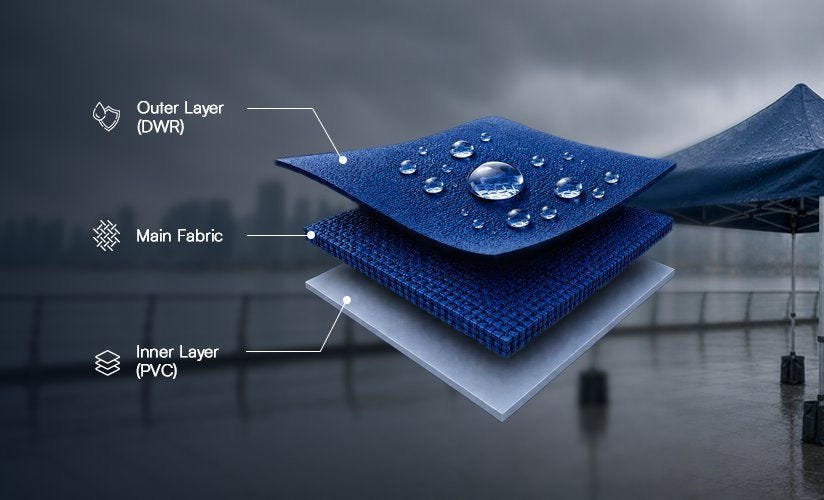
Canopy tent fabrics are treated with a combination of protective coatings including DWR (Durable Water Repellent), PVC or polyurethane waterproof layers, UV inhibitors, mold and mildew blockers, and fire-retardant finishes. These treatments work together to extend fabric life and keep your shelter performing through repeated outdoor use.
Buying a canopy tent based on fabric weight alone misses the point. A 600D polyester without proper coatings will fade, absorb moisture, and develop mold within a single season of regular use. The treatments applied to that base fabric are what actually determines the durability.
Think of the fabric as the foundation and the coatings as the protection system.
Whether you operate a market stall, manage events, or host outdoor activations, the right fabric treatments can significantly extend the lifespan, durability, and performance of your canopy tent. Commercial and professional canopy tents built for repeated deployments rely on multi-layer treatment systems because a single coating can not address every environmental stressor. Rain, sun, humidity, and fire risk all require dedicated solutions.
What Is DWR and How Does It Protect Canopy Fabric?
DWR stands for Durable Water Repellent. And this is a chemical finish, bonded to the outer surface of canopy fabric during manufacturing. When water contacts a DWR-treated surface, it beads up and rolls off rather than soaking into the weave.
This matters for two reasons:
Firstly, a saturated fabric becomes significantly heavier and can stress the frame. Secondly, moisture trapped in the weave creates the exact conditions that support mold and mildew growth.
DWR is not a permanent fix. Over time and with UV exposure, the treatment degrades. Most manufacturers recommend reapplying a spray-on DWR product every one to two seasons, depending on how frequently the tent is used and how it is stored.
There is a meaningful difference between these two terms and most buyers do not realize it until they are caught in a downpour.
Water resistant canopy fabric uses a DWR coating to repel light rain and moisture. It performs well in drizzle but is not designed to handle sustained rainfall or standing water on the roof panel.
Waterproof canopy fabric includes a secondary coating, typically PVC laminate or polyurethane applied to the underside of the fabric. This creates a true barrier that stops water from passing through. Look for a Hydrostatic Head rating of 1500mm or above when evaluating waterproof performance.
For heavy duty canopy tents used across multiple events per month, a PVC-coated fabric is a practical choice. The coating adds weight but delivers weather protection that water-resistant-only fabrics cannot match.
Mold and mildew resistant coatings work by introducing antimicrobial agents into the fabric structure. These agents disrupt the biological processes that allow fungal spores to establish and grow. Even with strong water repellency, no canopy fabric stays completely dry in all conditions. Coastal salt air, overnight condensation, and damp storage all introduce enough moisture to support mold growth on untreated fabric. A mold-resistant coating acts as a secondary defense when the water repellent layer has absorbed all it can.
The benefits become clear during storage. While damp, untreated fabrics may quickly develop mildew, odors, and discoloration, properly coated canopy fabrics offer greater resistance and help maintain their condition over time.
Storage habits still matter. Always allow your canopy to dry fully before packing. But a mold-resistant fabric gives you a realistic margin for error that uncoated alternatives do not.
Does UV Exposure Damage Canopy Tent Fabric?
Yes. And the damage is cumulative. Polymer chains are broken down with UV radiation into polyester and nylon fabrics, causing color fading, reduced tensile strength, and eventually brittleness. A canopy left deployed for long summer days without UV protection will show visible degradation within a single season. UV-resistant canopy fabric incorporates UV stabilizers either into the yarn during production or as a topcoat applied after weaving. These stabilizers absorb and scatter UV energy before it reaches the base polymer structure.
The key specification to look for is the UPF (Ultraviolet Protection Factor) rating. A fabric rated UPF 50+ blocks 98% of UV radiation. For canopies used daily in sun-exposed environments, such as open-air markets or sports facilities, this rating is not optional. It preserves both the fabric and anything or anyone sheltered beneath it.
Custom canopy tents printed with brand graphics especially benefit from UV-resistant fabrics because UV degradation fades print colors faster than it breaks down the base weave.
What Is CPAI-84 and Why Does It Matter?
CPAI-84 is a fire resistance standard developed by the Canvas Products Association International. It helps in establishing flammability requirements for canopy and tent fabrics used in commercial and public settings.
A fabric which meets CPAI-84 certification has passed controlled burn tests confirming it self-extinguishes within a defined time frame after an ignition source is removed. This prevents a small flame contact from escalating to a structural fire.
Many event venues, municipalities and other permit authorities now require documented CPAI-84 certification before a canopy can be used in a public space. If you operate at festivals, fairs, or licensed outdoor events, this certification is not a marketing checkbox. It is a legal and safety requirement.
Fire-retardant finishes on canopy fabrics are either inherent, that is built into the fiber chemistry or topically applied. Topical treatments can diminish with washing and weathering, so confirm with the manufacturer whether re-treatment is needed to maintain certification compliance.
For anyone managing event canopy tents for public-facing activations, CPAI-84 certified fabric should be treated as a baseline requirement rather than an optional upgrade.
What to Look For When Choosing a High-Performance Canopy Fabric
Evaluating canopy fabric quality comes down to a short list of verifiable specifications.
- Denier count: Higher denier (around 600D vs 300D) indicates thicker yarn and greater tear resistance
- DWR coating presence: This for surface-level water repellency
- Hydrostatic Head rating: Measures how much water pressure the fabric withstands before leaking- 1500mm minimum for outdoor use
- UV stabilization: Look for UPF rating or manufacturer documentation of UV inhibitor treatment
- CPAI-84 certification: This certification is required for the events and Public venues.
- Mold and mildew resistance: Important for coastal or high-humidity environments.
Taking a real-world example: A regional food truck operator running 15 events per month purchased basic 420D water-resistant canopies based on price. Within one season the canopies showed mold staining along seams, color fading on the roof panels, and one unit failed at a permitted venue due to lacking fire certification. Replacing the fleet with CPAI-84 certified 600D PVC-coated canopies doubled their upfront cost but eliminated replacement cycles and permitting complications.
Bottom Line
Canopy tent fabric treatments do far more than enhance appearance. Water repellent coatings help prevent moisture absorption, waterproof layers provide protection during heavy rain, mold resistant finishes reduce the risk of fabric damage during storage, UV inhibitors help preserve strength and print quality, and fire resistant certifications support compliance with event safety requirements. Understanding these fabric treatments helps you make a more informed purchase and protect your investment for years to come. The fabric you choose today plays a major role in how well your canopy performs in every season.E-Z UP offers a wide range of pop up canopy tents designed with commercial-grade fabric treatments suited for recurring professional use.
Frequently Asked Questions
What fabric treatments are used commonly on canopy tent fabrics?
Canopy tent fabrics are often treated with water-repellent, waterproof, UV-resistant, mold-resistant, and fire-retardant coatings. This helps in providing a comprehensive outdoor protection.
What is DWR and how does it help protect canopy fabrics?
DWR (Durable Water Repellent) is a fabric coating that causes water to bead and roll off the surface. This helps in preventing moisture absorption, mold growth, and fabric wear. The effectiveness can diminish over time and may require reapplication.
Are canopy tent fabrics water resistant or waterproof?
Most canopy tents are water-resistant and suitable for light rain. Whereas, waterproof models feature coated fabrics and sealed seams for reliable protection in heavier, prolonged rainfall.
What makes a canopy fabric resistant to mold and mildew?
Mold- and mildew-resistant fabrics use antimicrobial treatments to help prevent fungal growth, making them ideal for humid conditions and reducing the risk of staining and fabric damage.
What is CPAI-84 certification for canopy tents?
CPAI-84 is a fire-resistance standard which certifies a fabric can self-extinguish after exposure to an ignition source. It is often required for canopy tents used at public events, festivals, and licensed venues.