

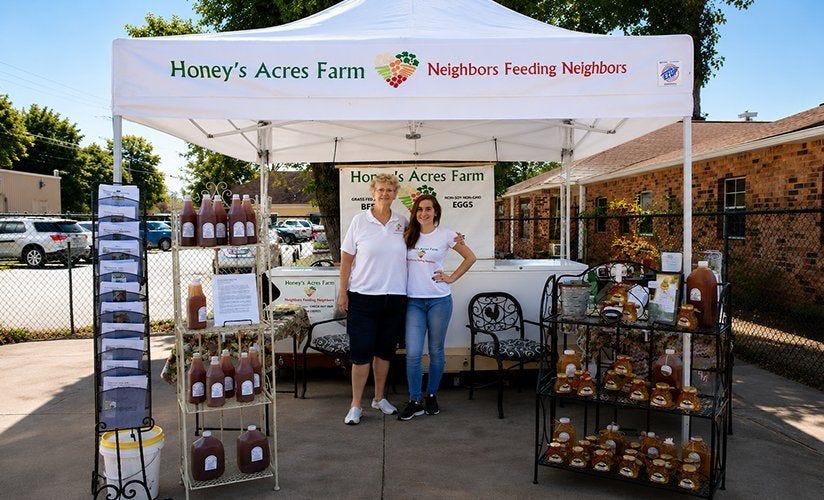
A farmers’ market canopy has to do more than create shade. It must fit the vendor space, present your brand clearly, withstand repeated setup, and be anchored for the conditions at every event. This guide explains what Canadian market vendors should compare before buying.
Start with the market’s vendor rules
Ask the organizer for the exact booth dimensions and vendor requirements before selecting a shelter. Many markets use 10 ft × 10 ft spaces, but rules can vary. Confirm permitted dimensions, anchoring or ballast requirements, fire-safety documentation, sidewall restrictions, setup times, and whether any part of the shelter may extend beyond the assigned footprint.
Local requirements and organizer policies can differ, so the market or local authority having jurisdiction is the best source for compliance questions.
Choose the right canopy size
10 ft × 10 ft
A 10 × 10 canopy fits many standard market stalls and provides up to 100 square feet of nominal footprint. It is usually the easiest size for a single vendor to transport, set up, and merchandise.
10 ft × 15 ft or 10 ft × 20 ft
Larger models provide more covered selling space but require a larger approved booth, more anchoring capacity, and additional transport and setup planning. Confirm that the market accepts the full footprint before choosing one.
Use the E-Z UP shelter comparison to compare model categories, materials, available sizes, and recommended uses.
Match the frame to your setup frequency
Occasional vendors may prioritize a lighter, more portable recreational or light-duty model. Weekly vendors, mobile businesses, and teams that set up repeatedly should generally compare medium-duty, heavy-duty, and professional systems designed for more frequent use. Frame material, leg geometry, truss construction, repairability, packed size, and available replacement parts matter over the life of the shelter.
Plan for rain, sun, and changing weather
Waterproof and water-resistant are not interchangeable terms. Fabric construction, coatings, seams, fit, and maintenance all influence performance. Review the detailed guide to waterproof and water-resistant pop-up canopies before choosing a top.
A pop-up canopy is a temporary shelter, not a permanent all-weather structure. Monitor forecasts, never leave it unattended, and take it down when conditions become unsafe.
Anchor every leg every time
All canopy tents must be securely anchored, even on a calm day. The appropriate method depends on the surface, weather, shelter size, and organizer’s rules. Stakes and guy lines may be appropriate on suitable ground; approved weights or ballast are commonly needed on pavement where staking is not permitted. Attach anchoring equipment according to the product instructions.
Read the complete canopy anchoring guide and follow the event’s stated requirements.
Make branding readable from the aisle
A custom-printed top, valance, banner, or sidewall can help shoppers identify your business quickly. Prioritize a clear business name, strong contrast, and a simple message that remains legible at a distance. E-Z UP Australia offers custom shelters and design support for logos and event graphics.
Build a practical vendor kit
- Canopy frame, fitted top, and protective carry bag
- Anchors or organizer-approved weights for every leg
- Sidewalls or a rear wall where permitted
- Tables, washable covers, signage, lighting, and extension equipment approved for the venue
- Basic cleaning supplies and any replacement hardware recommended for the model
- Copies of required product or fire-safety documentation
Frequently asked questions
What canopy size is best for a farmers’ market?
A 10 × 10 canopy is a common choice because it fits many standard vendor spaces, but the organizer’s dimensions and rules should determine the final size.
Do I need canopy weights at a farmers’ market?
You need an approved method to secure the shelter. Many paved venues require weights because stakes cannot be used. Ask the organizer for its minimum ballast and attachment requirements, then follow the shelter manufacturer’s instructions.
Should a weekly vendor buy a commercial canopy?
Frequent setup increases wear. Weekly vendors should compare medium-duty or professional models for frame strength, repairability, warranty, packed weight, and ease of use rather than choosing on price alone.