

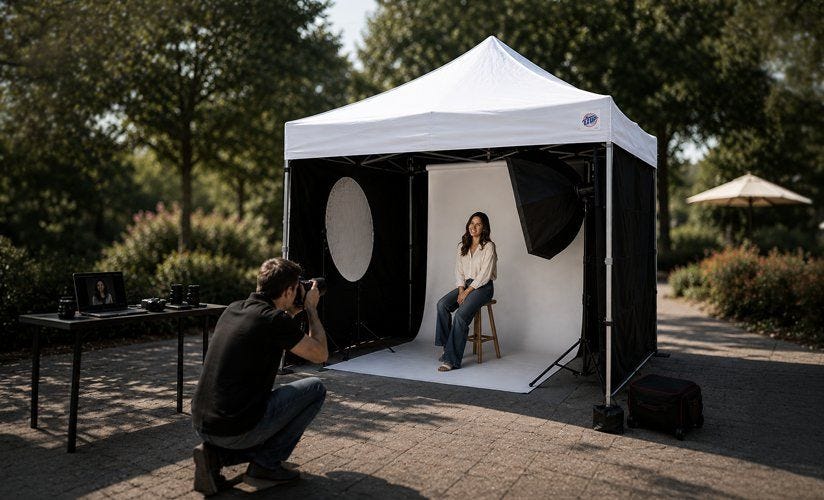
A photography canopy tent turns any outdoor location into a controlled shooting environment. By blocking harsh overhead sun and diffusing natural light through the canopy roof, photographers get softer and more flattering results without expensive studio gear. A 10x10 pop up canopy is the most popular size for solo and small-team setups.
Outdoor photography comes with real challenges. Harsh midday sun blows out skin tones. Shifting clouds kill consistency. Wind kicks dust onto lenses and topples light stands. A well-chosen outdoor photography canopy tent addresses all three at once, and it packs into a roller bag that fits in a car trunk.
Whether you are shooting family portraits at a community fair, running a mini-session business, or building a full portable outdoor photo studio, this guide walks through exactly how to make it work.
Why Photographers Are Using Canopy Tents as Outdoor Studios
The idea is simple! A canopy roof acts as a giant diffusion panel overhead, softening direct sunlight the same way a large softbox does in a studio. Instead of battling the sun, you use the tent to tame it.
Photographers who work at school events, wedding venues, and pop-up fairs have adopted this approach for several practical reasons:
- No reliance on weather or cloud cover for consistent light
- Defined shooting zone that keeps curious bystanders out of the frame
- Professional appearance that builds client confidence on-site
- Easy breakdown and transport between locations
What Size Canopy Works Best for an Outdoor Photography Setup?
For most photographers working alone or with a small assistant, a 10x10 pop up canopy is the right starting point. It gives you 100 square feet of covered space, enough for a subject, a backdrop stand, a stool or bench, and a shooting position for the photographer.
For group shots, families, or corporate headshot stations, a 10x20 canopy gives noticeably more working room. It also allows you to divide the space into a shooting zone and a client waiting area.
E-Z UP's 10x10 canopy collection covers a range of frame strengths and materials from lightweight recreational options to commercial-grade shelters built for repeated daily use. For photographers doing frequent outdoor sessions, a heavier-duty frame is worth the investment.
Key sizing considerations:
- Solo portrait sessions: 10x10 is sufficient
- Family or group shoots: 10x15 or 10x20 preferred
- Multi-station photo booths: consider connecting two 10x10 frames side by side
How Does a Canopy Tent Control Natural Light for Photography?
Natural light is unpredictable. A canopy tent gives you a consistent light environment by acting as a filter between the subject and the sky.
The Natural Softbox Effect
A white canopy roof diffuses sunlight, reducing harsh shadows and creating softer, more even lighting for outdoor photography.For even better results, position the canopy so that open sides face the direction of the softest available light. In late afternoon shoots, one open side facing the western sky produces a warm and flattering fill. Adding a collapsible reflector inside the tent bounces additional light into shadow areas.
This approach requires no power source and produces reliable results that would otherwise need multiple artificial lights to replicate.
Managing Harsh Midday Light
Midday sun is the enemy of outdoor portrait photography. Without a canopy tent, photographers either avoid shooting at that time or over-rely on editing to recover blown-out highlights.
With canopy overhead, midday sessions become manageable. The tent blocks direct overhead rays while diffusing ambient light into the shooting space. You still benefit from the brightness of midday without the harshness that wrecks unprotected outdoor shoots.
Can Canopy Sidewalls Work as Photography Backdrops?
Yes. And this is one of the most underused advantages of a photography canopy tent setup.
Sidewalls serve two functions at once. First, they block environmental distractions like foot traffic, parked cars, or cluttered backgrounds. Second, a plain solid-color sidewall acts as a clean neutral backdrop that requires no additional equipment. White and light gray sidewalls produce a clean look suitable for professional headshots and family portraits. Black sidewalls create high-contrast dramatic lighting setups, similar to techniques used by fashion photographers shooting in controlled environments.
E-Z UP's canopy sidewalls attach directly to the canopy frame and come in options which include zippered panels, mesh windows, and solid fabric giving photographers multiple ways to configure the shooting space depending on the session type.
For photographers who want their setup to function as a marketing tool as well as a workspace, a custom canopy tent photography business setup makes a clear sense.
A custom-printed canopy with your business name, logo, and brand colors is instantly recognizable at any outdoor event. It communicates professionalism before a single conversation happens. It also eliminates the need for separate branded banners and signage.
The E-Z UP Custom Vantage Package is a practical starting point for photographers. It includes a printed canopy top, a custom sidewall, a director's chair, and a table cover, essentially a complete branded studio setup that arrives ready to deploy.
For photographers weighing whether American-made construction matters for long-term durability, E-Z UP's breakdown of Freedom83 canopy features explains the structural and material differences, worth understanding before making a purchase.
How to Secure a Canopy Tent Safely During Outdoor Photo Shoots
An unsecured canopy is a genuine safety hazard. Even a 15 mph wind gust can overturn a tent that is not properly anchored. This means expensive gear gets damaged and the sessions end abruptly. Use a combination of anchoring methods for every shoot:
- Stake kits for grass and soft ground
- Sandbag or weight bag sets for concrete, asphalt, or paved festival areas
- Frame connector tie-downs when setting up adjacent to fixed structures
A clear forecast doesn't guarantee low wind. And conditions can change throughout the day, especially at open outdoor venues. Sidewalls also add wind resistance when properly zippered and attached. During high-wind conditions, remove all sidewalls and lower the canopy to its shortest leg position to reduce the sail effect.
Accessories That Make an Outdoor Photography Canopy Setup More Functional
The tent itself is the foundation, but a few targeted accessories makes the difference between a frustrating setup and a smooth professional session-
- Weight bags for stable anchoring without stakes on paved ground
- Reflectors or diffusion panels manages fill light inside the tent
- A portable stool or bench for subject posing
- LED panel lights or speedlights for overcast days or evening events
- Clip-on tie-downs to secure fabric backdrops to the frame interior
- A roller bag or wheeled carry case- for fast packing between locations
For wedding photography canopy tent setups, consider adding string lights along the interior ceiling peak for an ambient warm glow that photographs beautifully in couple portraits.
Conclusion
A photography canopy tent is one of the most practical investments a working outdoor photographer can make. It gives a controlled light environment, a clean backdrop, a professional client-facing presence, and a portable outdoor photo studio which deploys in minutes. Start with a 10x10 pop up canopy, add sidewalls for backdrop control, anchor it properly, and you have a setup that performs across hundreds of sessions. E-Z UP offers a range of commercial-grade frames, sidewall options, and custom printing to match any photography workflow from weekend pop-up portraits to full wedding event coverage.
Frequently Asked Questions
Can you use a canopy tent as an outdoor photography studio?
Yes. A canopy tent helps in creating a more controlled shooting environment outdoors. Canopy softens direct sunlight, sidewalls help in reducing distractions, and the enclosed space provides a consistent area for photos.
What is the best canopy tent size for outdoor photography?
A 10x10 pop up canopy works well for individual and small group portrait sessions. Photographers shooting families or running multi-subject events often prefer a 10x15 or 10x20 for more working room and space for client queuing.
How does a canopy tent help control natural light for photography?
The canopy roof scatters direct sunlight and reduces harsh contrast. Along with functioning, similarly to a large overhead diffusion panel. This produces softer shadows and a more even exposure, across the subject without requiring artificial lighting in most conditions.
Can canopy sidewalls be used as photography backdrops?
Yes. Solid white or light gray sidewalls serve as clean neutral backdrops. Black sidewalls create high-contrast dramatic setups. Photographers can also hang lightweight fabrics from the interior frame for custom background textures.
Is a commercial canopy tent better than a recreational canopy for photography?
For photographers using a tent regularly, a commercial grade pop up canopy is the better investment. Commercial frames are built from heavier-gauge materials that withstand repeated setup cycles, and the fabrics hold up better under UV exposure and daily use.