

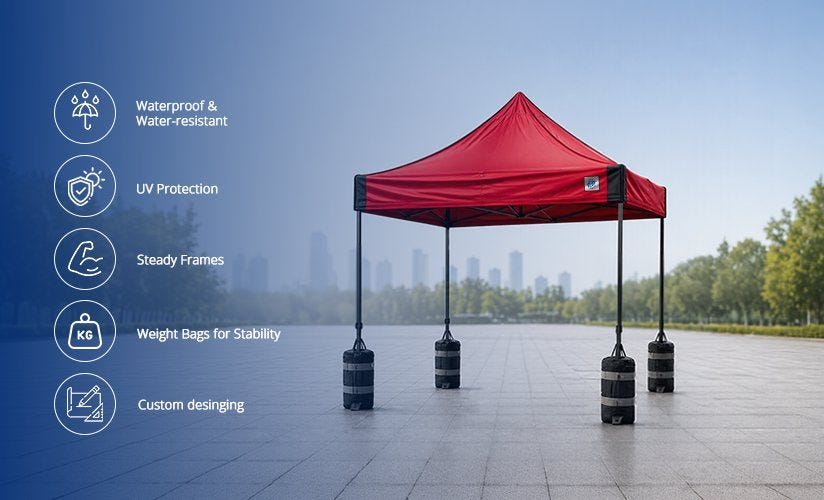
Walk any trade show or outdoor market and you can spot the difference in about ten seconds. Some tents look sharp after eight hours in the sun. Others are sagging by noon. The gap usually comes down to one thing…whether the person buying it knew what to look for before they spent the money.
Here is what actually matters when you are shopping for a professional canopy tent.
The Frame Is Everything
This is where the real quality difference lives. A heavy duty aluminum or steel frame is the baseline for anything calling itself professional grade. Aluminum is lighter, rust-resistant, and easier to move between events. Steel is denser and handles rough conditions well but adds weight to every carry. Most professional vendors lean aluminum for that reason.
What separates a decent frame from a great one is the leg design and locking mechanism. E-Z UP's Endeavor uses a patented octagonal leg design that handles repeated setups without the wobble you see in cheaper frames after a season. Their ONE-UP locking system means one person can get the shelter up in seconds with no tools and no second pair of hands holding the frame steady.
If the frame flexes when you push on it in the store, it will flex a lot more in a crosswind at hour five of an outdoor event.
Canopy Fabric: Not All Covers Are Equal
The canopy top is what takes the beating. Sun, rain, wind, packed into a bag, unpacked again. A tent that looks fine in a product photo can start breaking down after a few weekends if the fabric is not built for it.
A waterproof heavy duty canopy tent uses coated polyester or vinyl fabric that sheds water rather than absorbing it. The seams matter as much as the material. Taped or heat-welded seams hold up through rain far better than stitched ones that eventually let water through.
Vinyl fabric canopy tops are heavier but extremely durable for permanent or semi-permanent setups. Polyester with a high denier count covers most outdoor vendor needs well without the extra weight.
UV Protection Is Not Optional for Outdoor Use
Vendors working summer markets or beach events figure this out fast.
A UV protection canopy tent blocks harmful rays for the people working underneath it, not just the products on the table. E-Z UP's Eclipse blocks 99% of UVA and UVB rays. That number matters more after hour six in direct sun than any spec sheet makes it sound. For staff working full-day events regularly, it is genuinely a health consideration, not just a comfort one.
Check the UPF rating when comparing options. A professional grade canopy should list it clearly.
Stability in Wind and Rain
A tent that works in perfect weather is not a professional tent. It is a fair-weather tent.
Stability comes from three places, which are frame construction, leg anchoring options, and canopy tension. Look for tents that include stake loops or weight bag attachment points at each leg. A tight canopy top with proper tension reduces the sail effect that causes cheaper tents to lift or collapse in wind.
We publish wind resistance ratings for our shelters. That kind of specific performance data is a good sign that the product has been genuinely tested rather than just described with marketing language.
Custom Branding Capability
For business use, a custom canopy tent with logo is not an accessory. It is the point.
A professional setup should work as a branded environment, not just a shade structure. E-Z UP's in-house digital printing produces full-color graphics on the canopy top, sidewalls, table covers, and flags. The Custom Eclipse and Custom Vantage packages bundle the shelter with matching branded accessories so the whole setup looks intentional rather than assembled from different vendors.
Good printing on a canopy lasts for years when the base material is quality polyester built to handle UV exposure. Cheap printing on cheap fabric fades and cracks fast.
Portability and Setup Time
A professional canopy tent gets used often. Setup and breakdown time adds up across a season.
One-piece frames that open in a single motion, roller bags with wheels, and labeled components all reduce the hassle of running events week after week. If setup requires more than one person or more than a few minutes, that cost shows up every single time you use it.
The Bottom Line
A professional canopy tent is not the place to cut corners if you are running events regularly. The frame, the fabric, the UV rating, the branding setup, every one of those details shows up in how the tent performs over a full season, not just the first weekend out of the bag. E-Z UP has been building professional shelters since 1983 and the product lineup reflects that.
FAQs
What are the professional canopy tent features?
A solid aluminum or steel frame, waterproof coated fabric, UV protection rating, wind-rated stability, and stake or weight bag anchor points are the baseline. Branding capability and fast solo setup separate the professional tier from recreational options.
What's the difference between a commercial and professional grade canopy?
Commercial grade typically means the tent is built for permanent or near-permanent installation with heavier materials. Professional grade covers high-frequency portable use where durability and fast setup both matter, which is what most vendors and event teams actually need.
How do I know if a canopy tent will last for years?
Check the frame material, denier count on the fabric, seam construction, and whether the brand publishes wind ratings. A manufacturer willing to put specific performance numbers on a product is usually one that has actually tested it.
What frame material is best for a professional canopy tent?
Aluminum is the standard choice for most professional users. It resists rust, stays lighter than steel, and holds up through repeated setups. Steel makes sense for stationary or industrial applications where weight is less of a concern.
Does a professional canopy tent come with sidewalls?
Most professional tents sell sidewalls separately or as part of a package. E-Z UP offers full sidewalls, half walls, and window panels that attach to their frames. Having that option matters for rain, wind, and creating an enclosed branded environment at events.
What weight canopy is considered professional grade?
Canopy fabric in the 300 to 600 denier range is generally considered professional grade for portable shelters. Heavier than that moves into commercial territory. Anything below 300 denier is typically a recreational or entry-level product.